
Autofill
Paste the link. Keep the useful detail.
Product context moves into a structured item through the current deterministic URL Auto-fill path.
tresgriferia.com/study-colors...

STUDY Rapid-box mixer
Ref 262280040PM
One live project connects rooms, sourcing, suppliers, renderings, documents, and a client-safe review space.
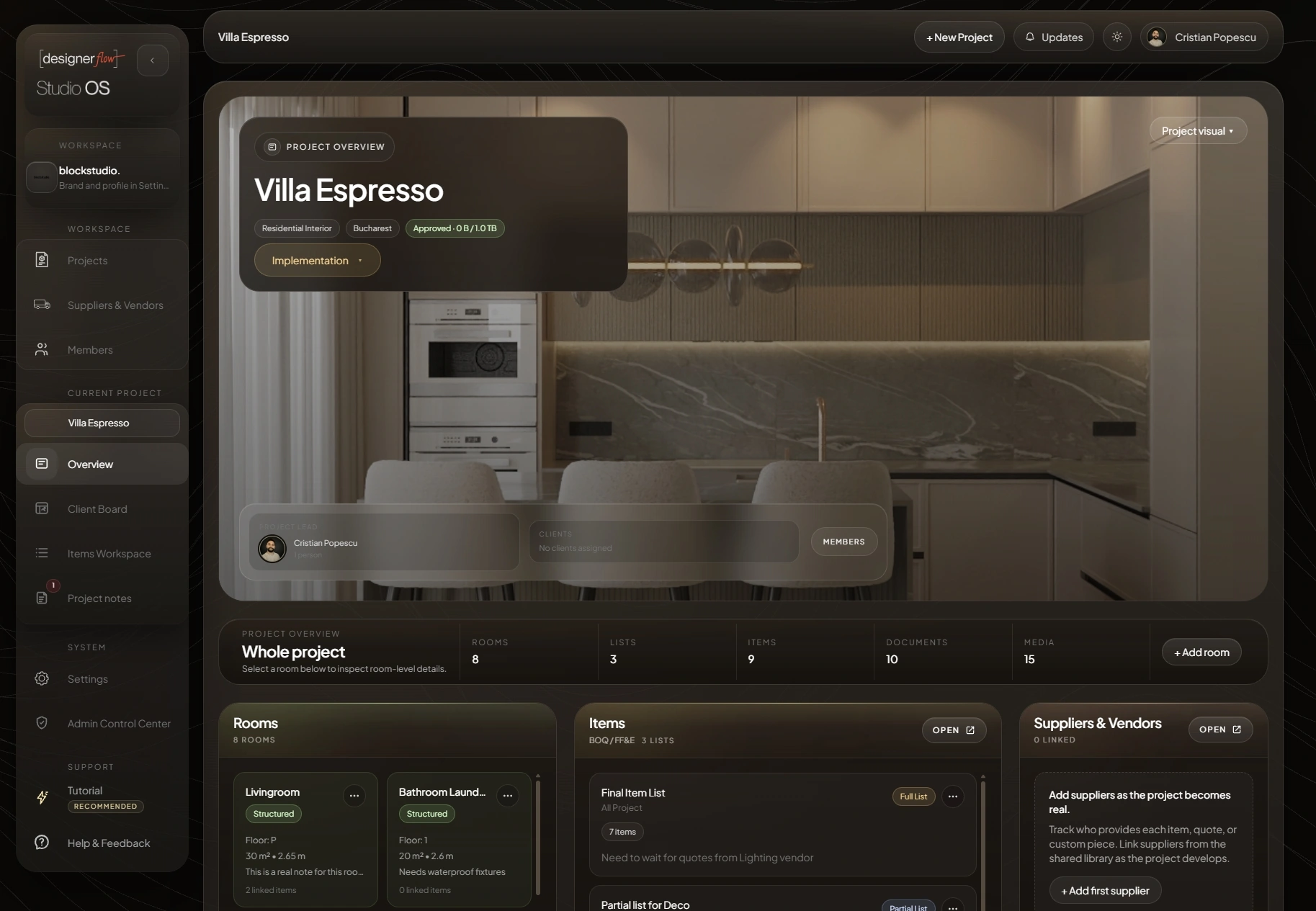
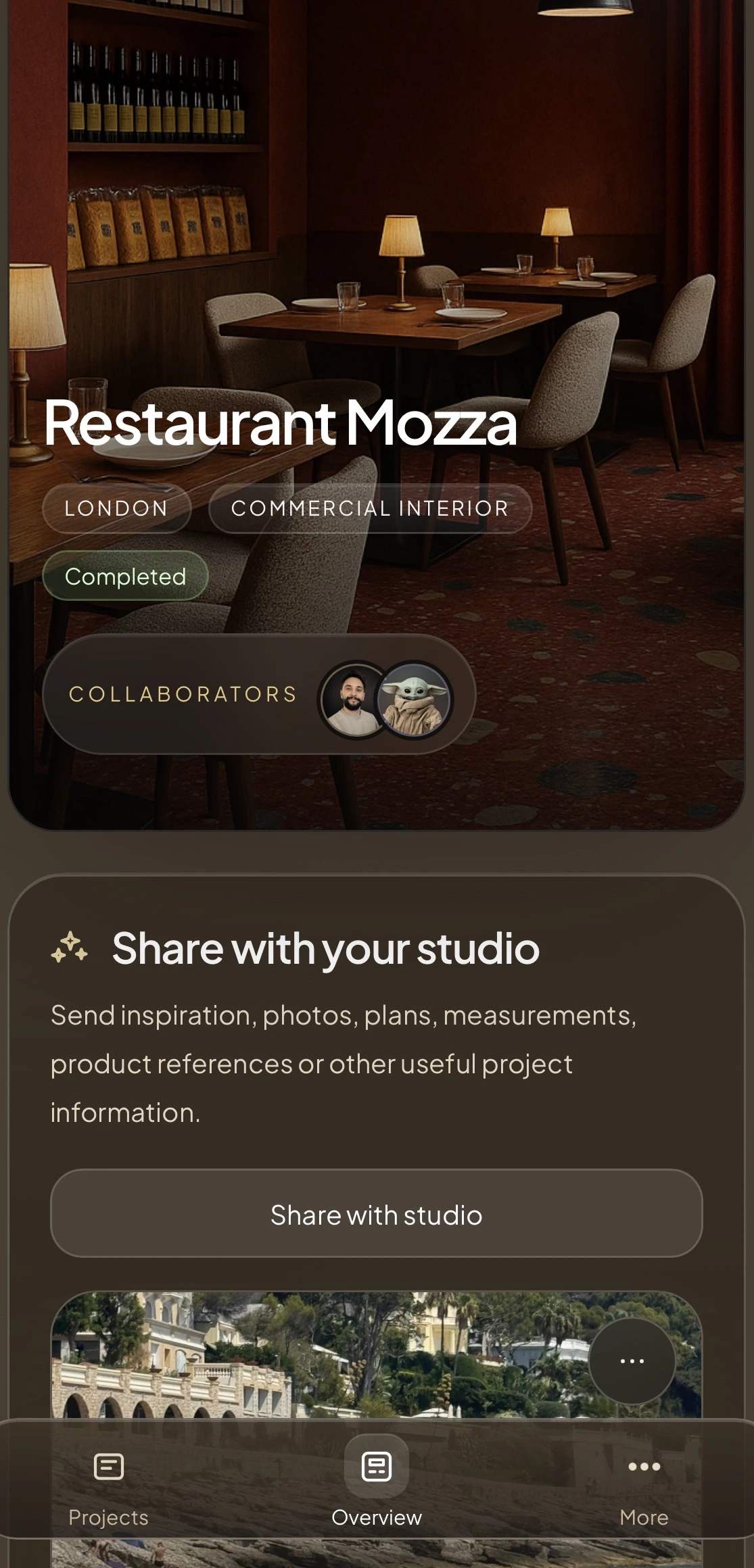
Rooms and people set the context.
Items become structured project records.
Current media and documents stay visible.
Quotes and client handoffs use live data.
Rooms, lists, documents, renderings, suppliers, and recent activity stay connected to the same project identity and current state.
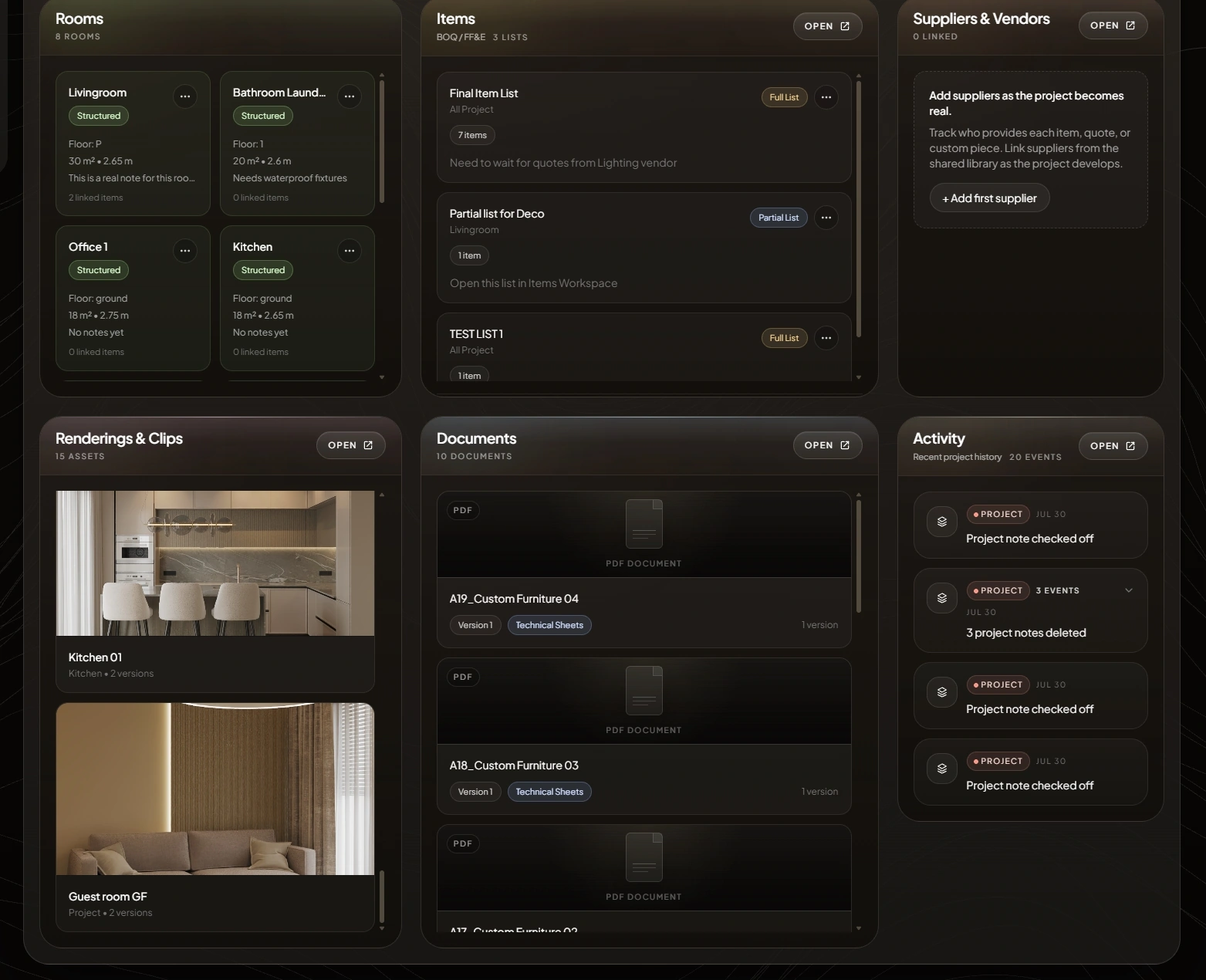
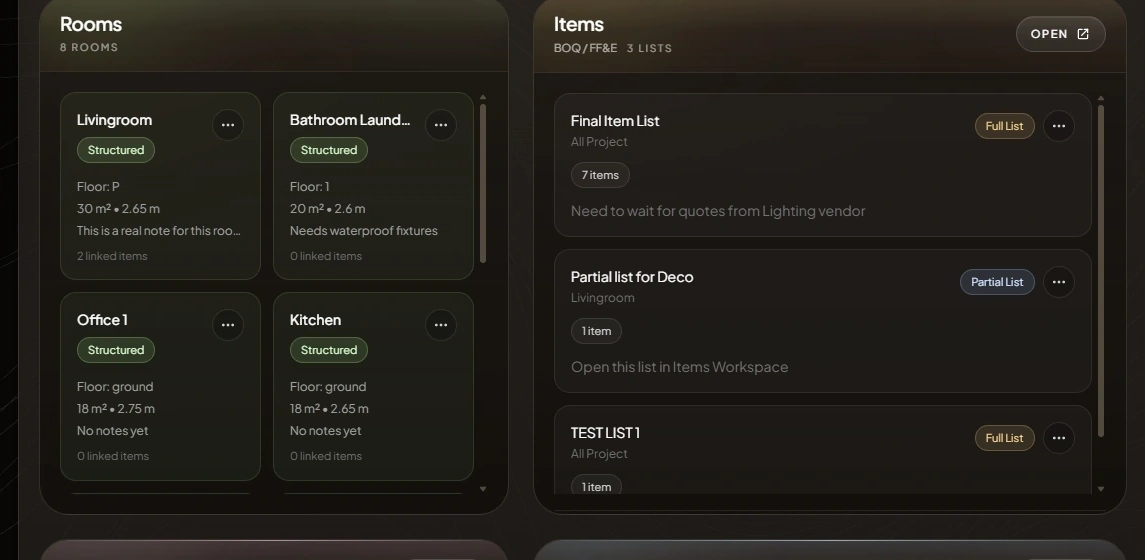
Open a room, item, visual, or document without losing the project around it.
Clients review only what the studio shares: project visuals, product lists, documents, and comments in a calm project workspace.
Only the project information the studio publishes.
Review stays anchored to the valid revision.
Conversation remains beside the shared asset.
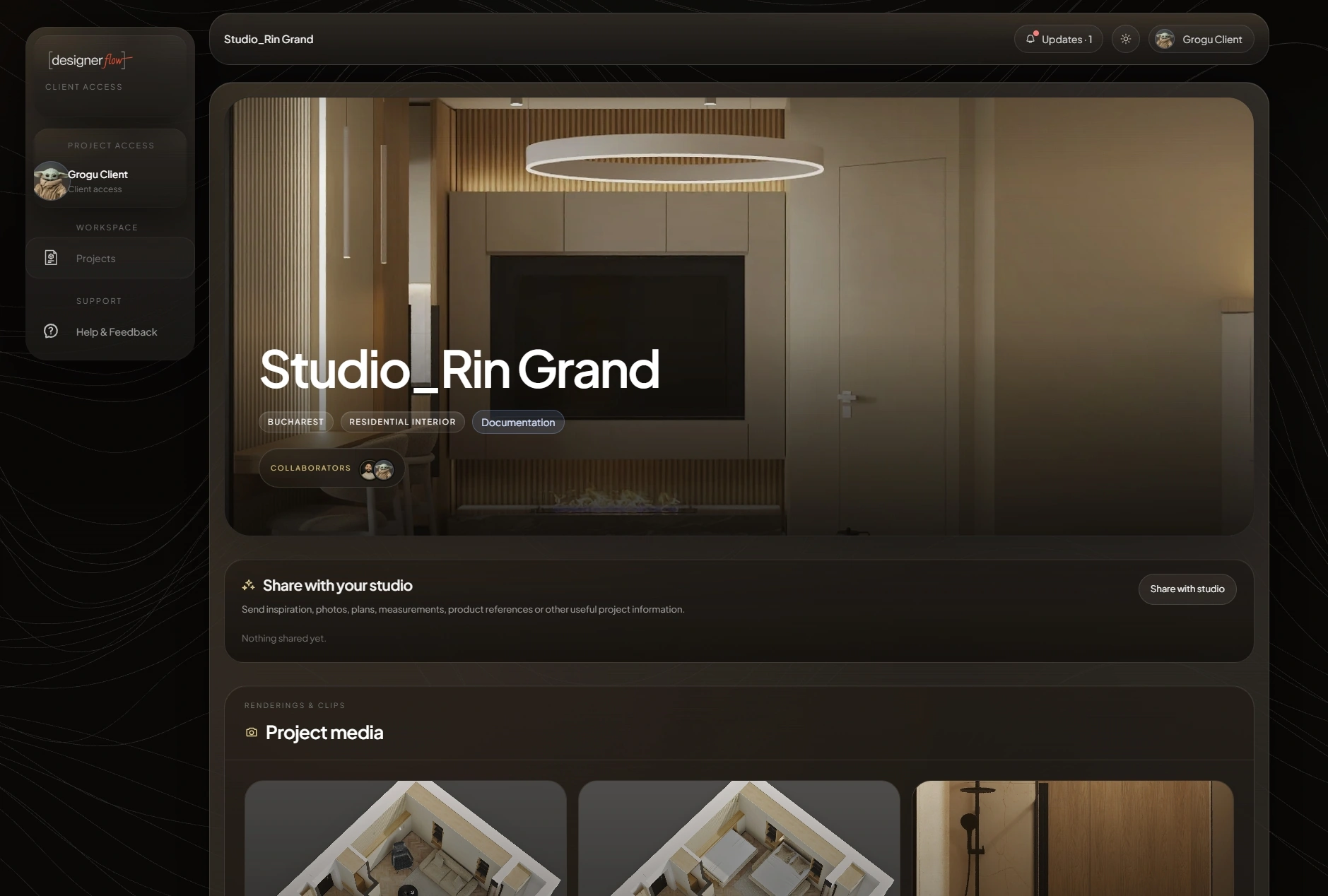
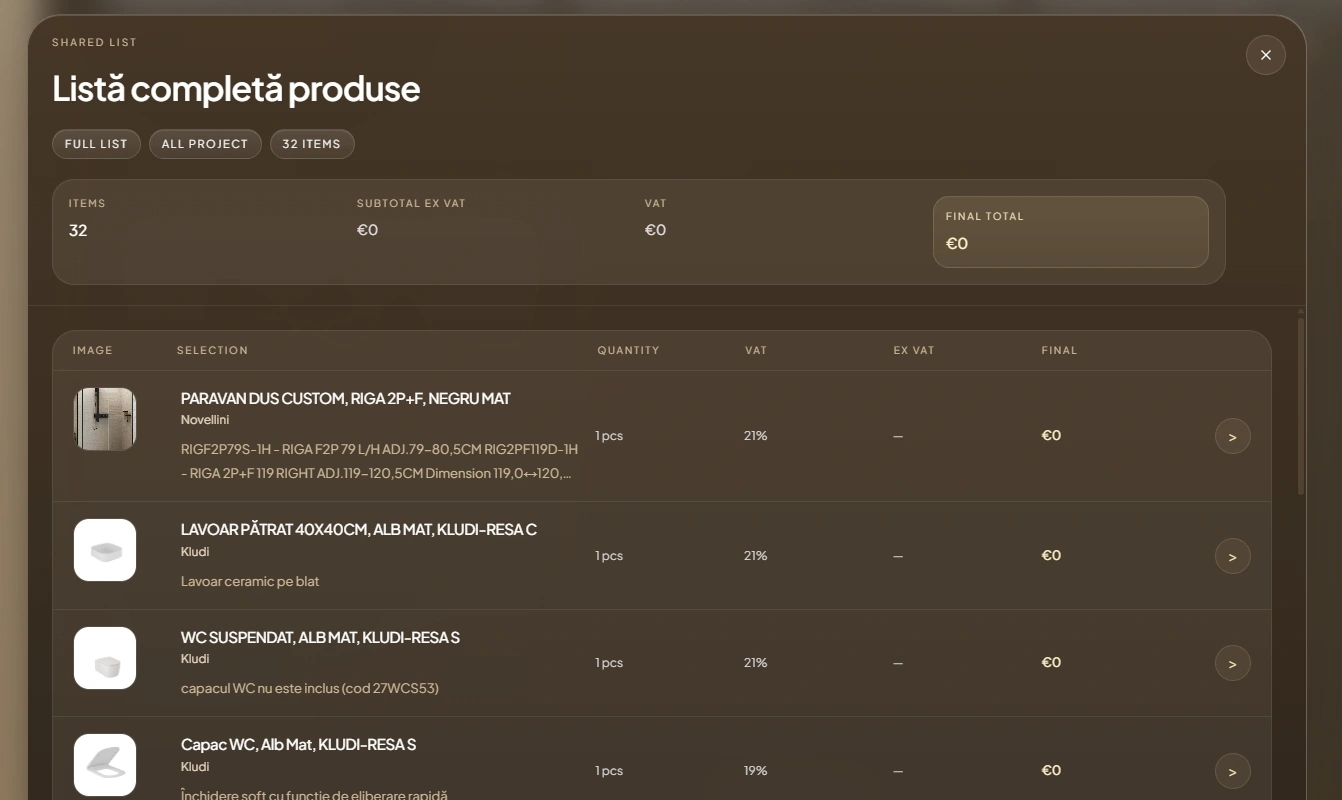
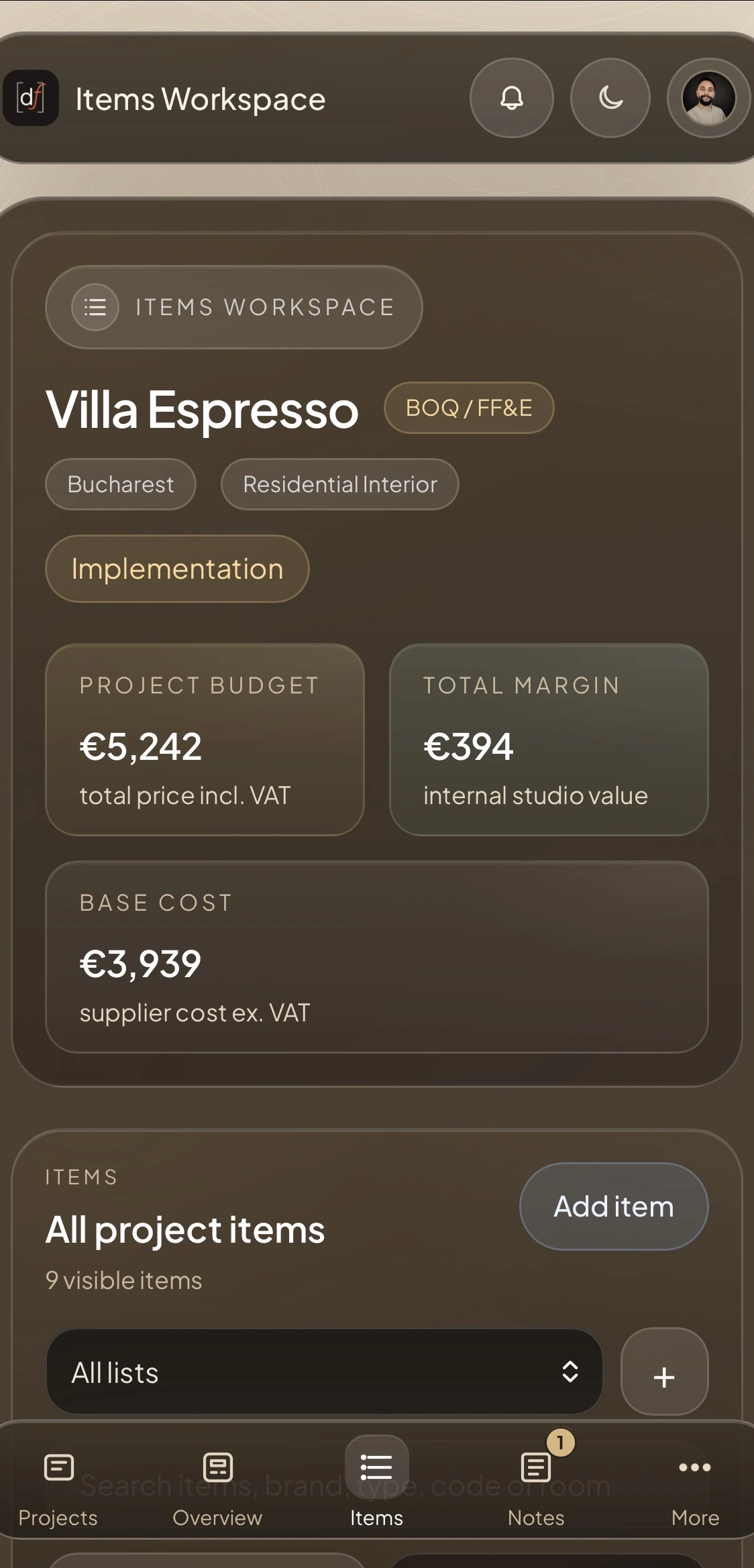
Capture product context once, then keep quantities, VAT, rooms, status, vendor, brand, references, and quote output in one operational workspace.
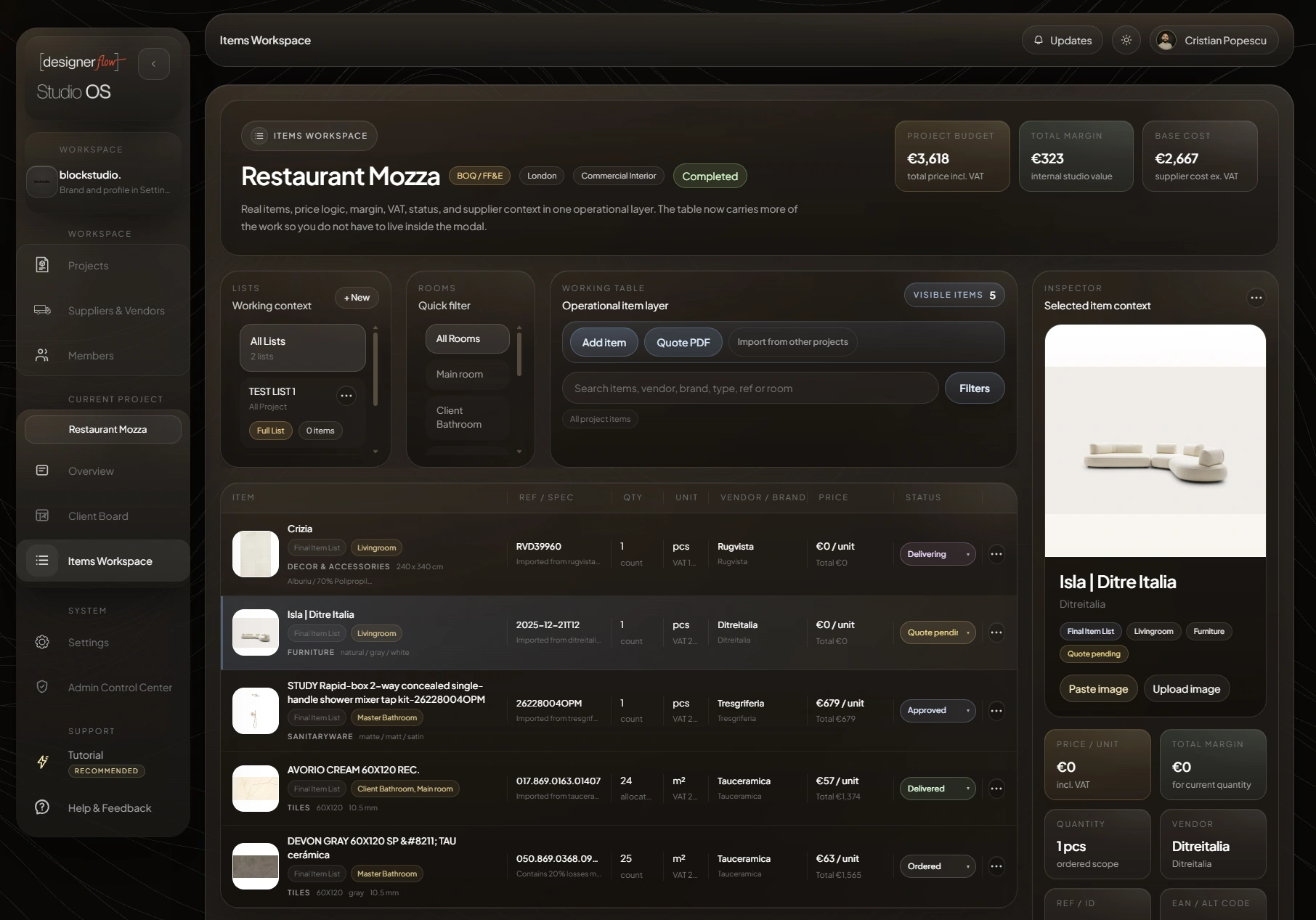
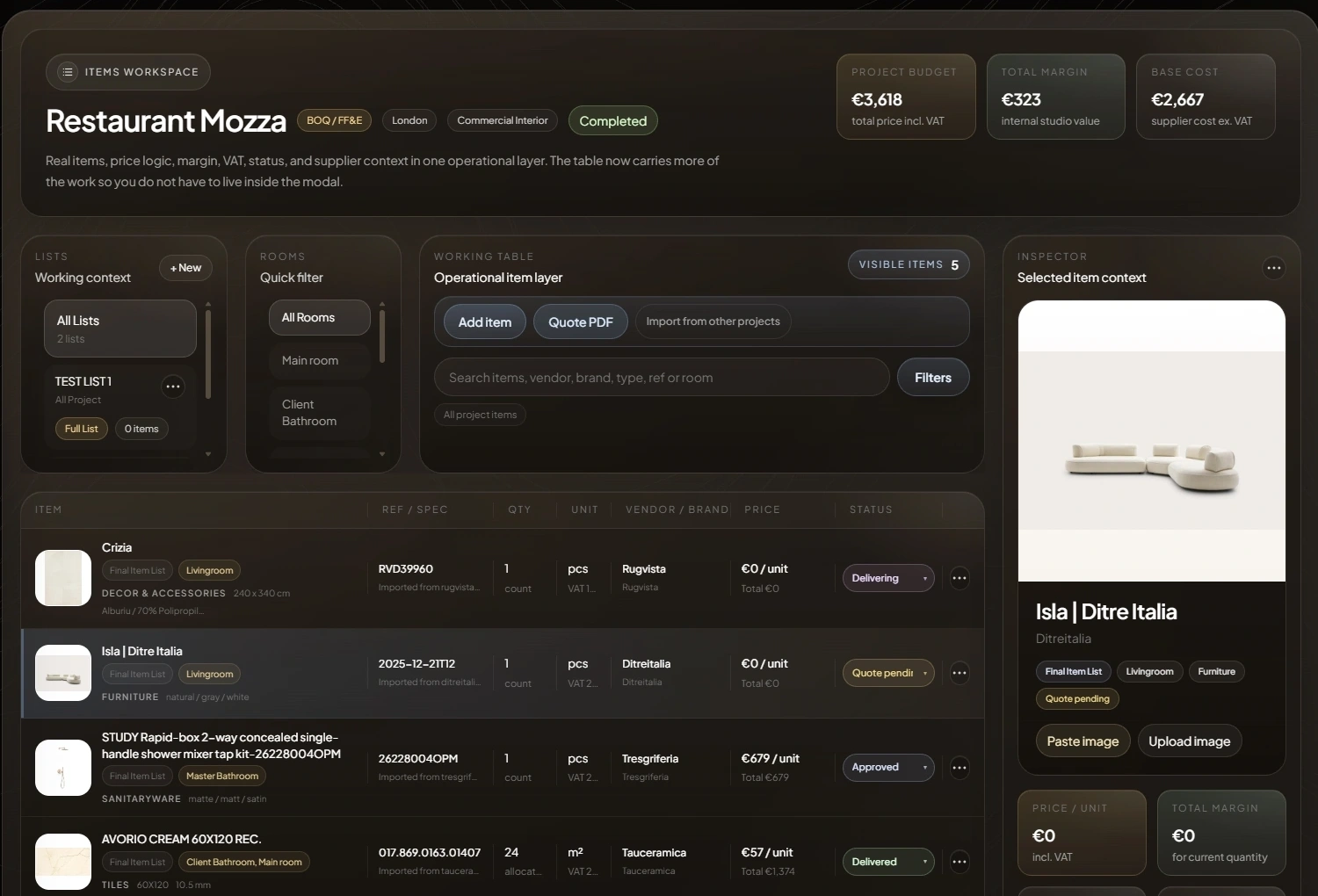
Product context moves into a structured item through the current deterministic URL Auto-fill path.
The current filtered workspace produces a clear branded PDF with quantities, rooms, references, vendors, brands, and source links.
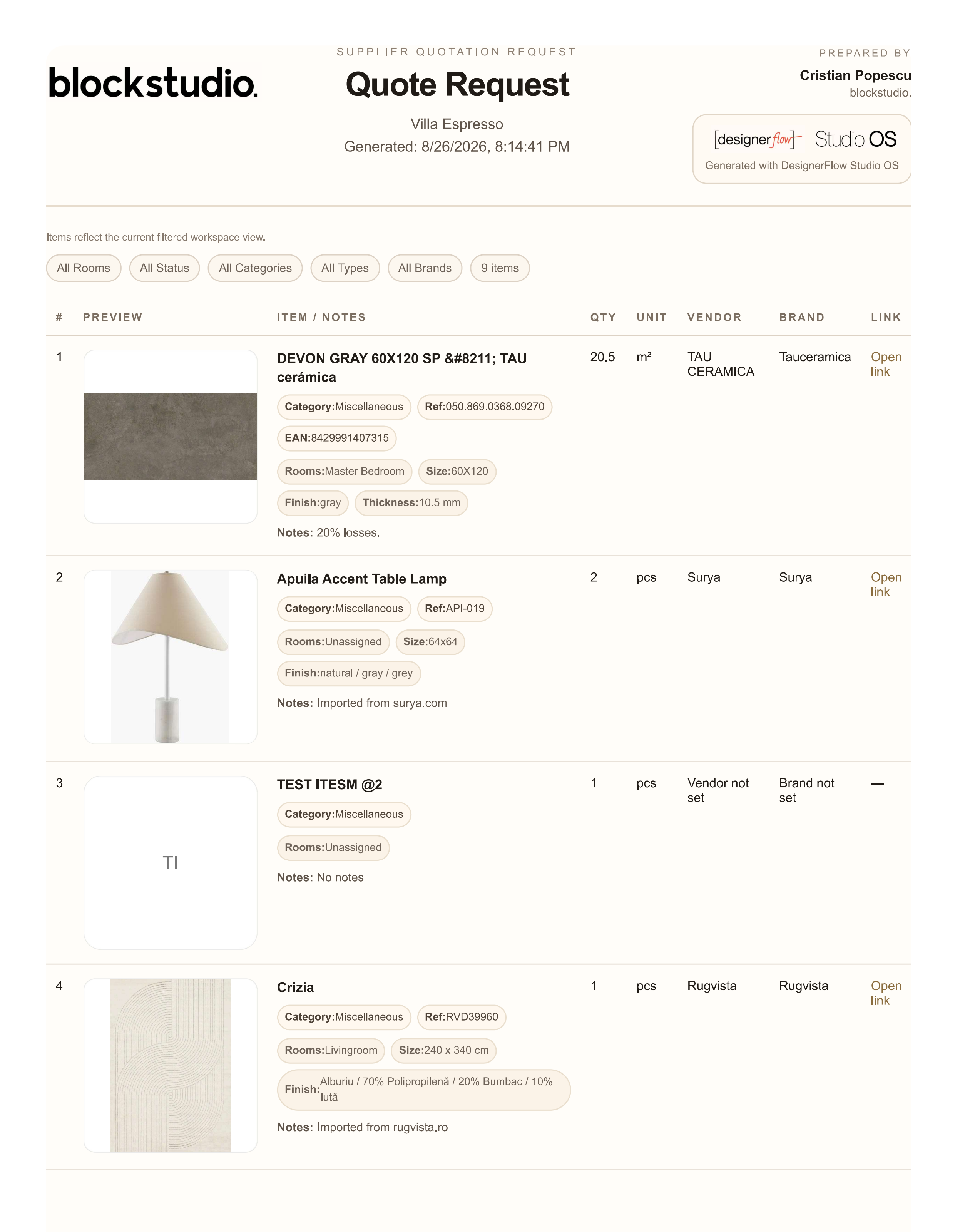
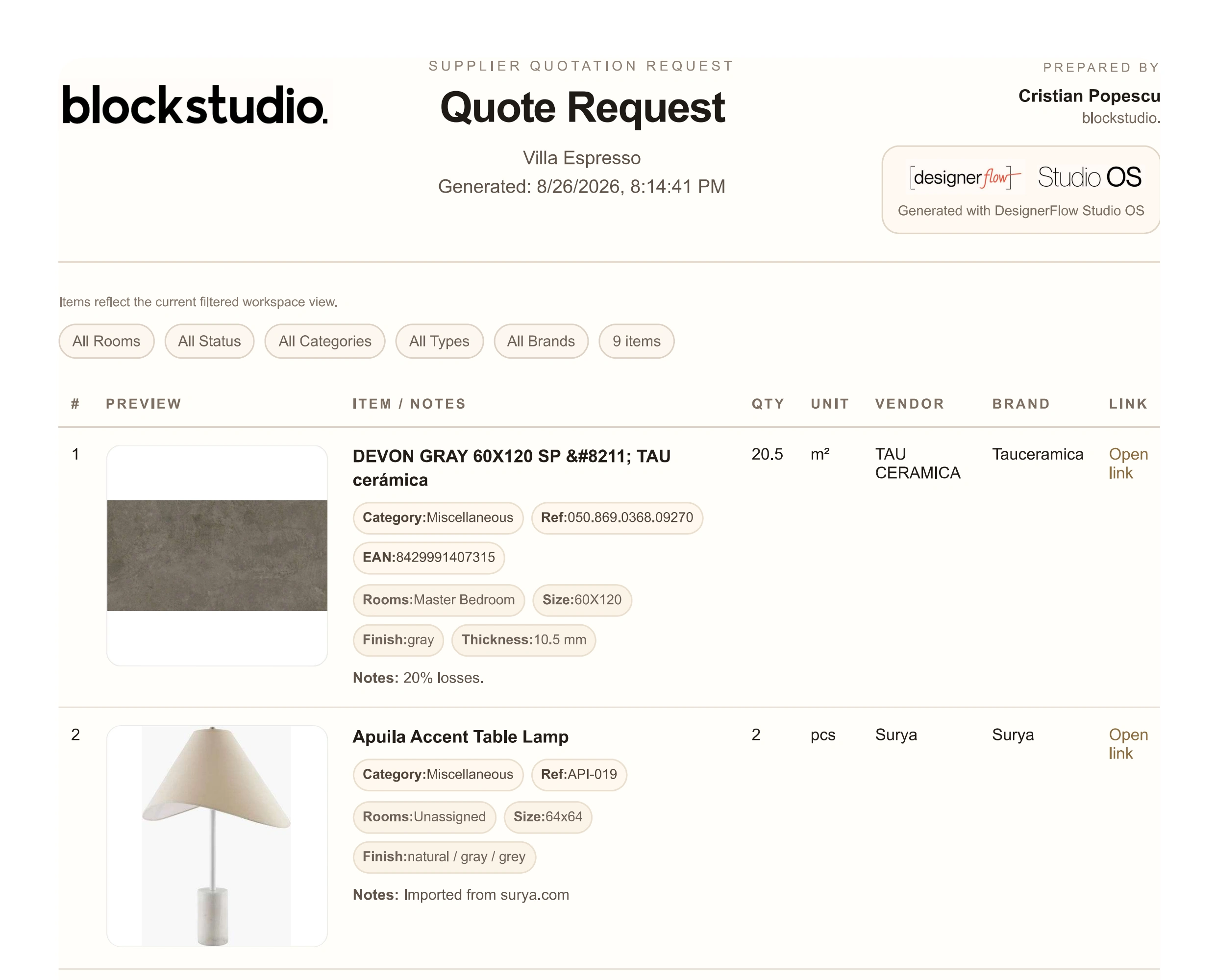
Version history remains available while the project, the card, and the client-facing review stay anchored to the valid current version.
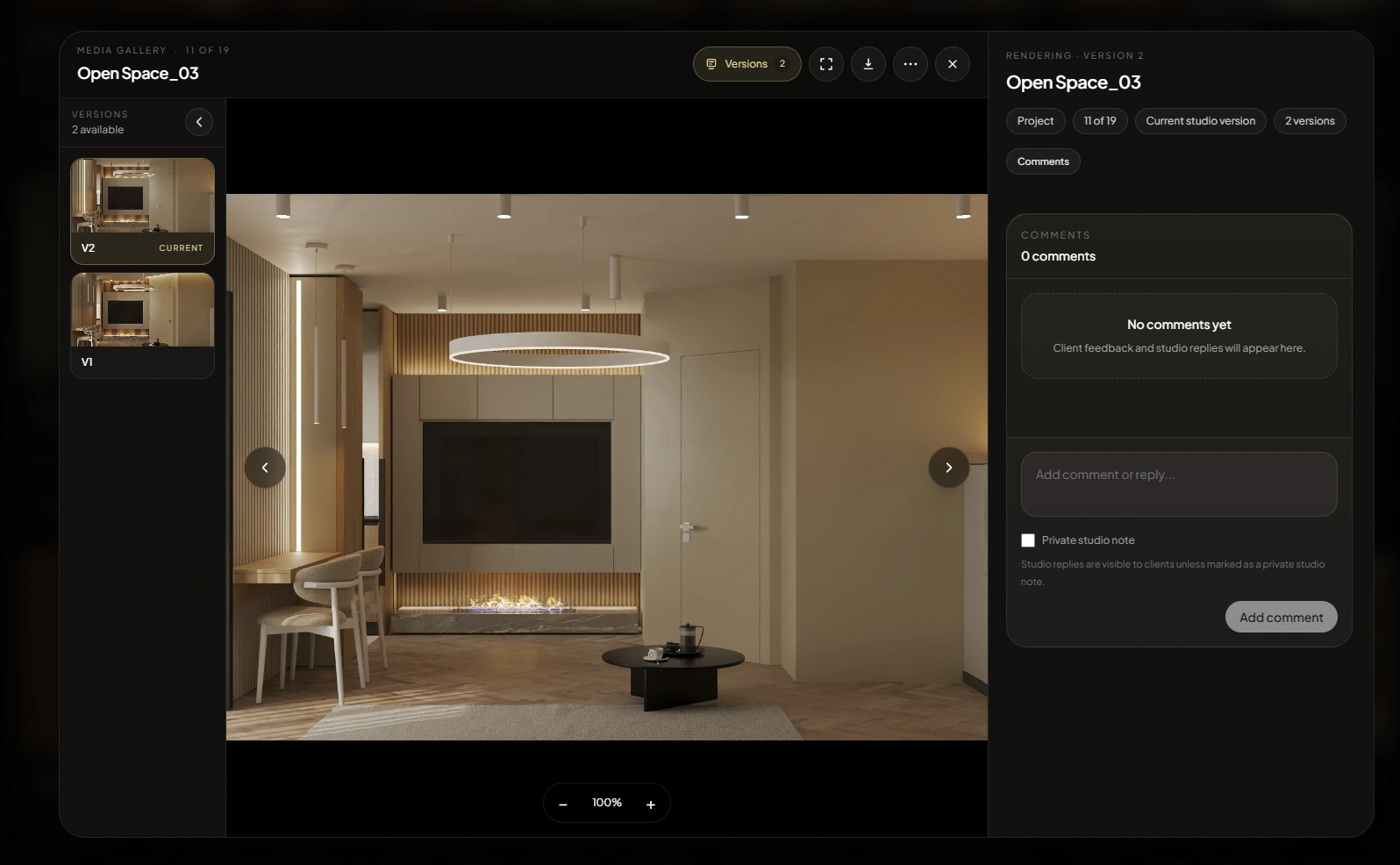
Review another version without losing which rendering is current.
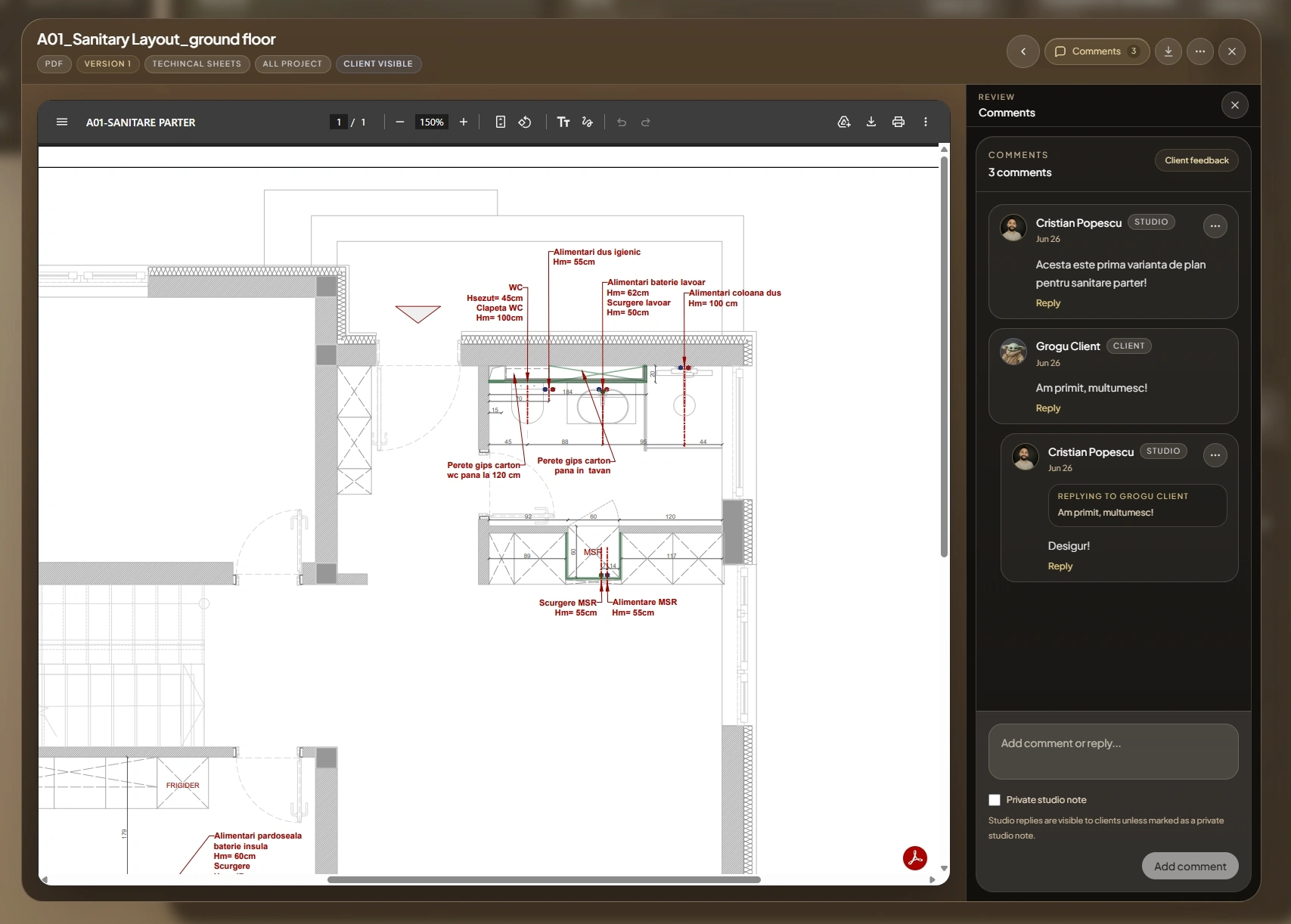
Technical PDFs, version context, client visibility, and studio-client replies stay in one review surface.
Keep vendors, contacts, categories, and links available to the whole studio instead of one spreadsheet.
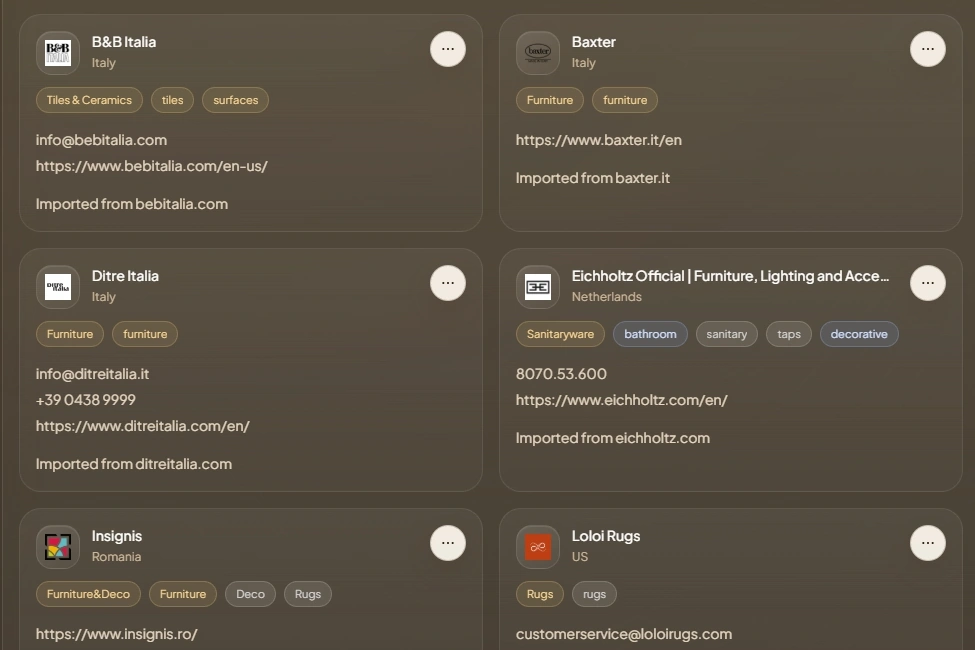
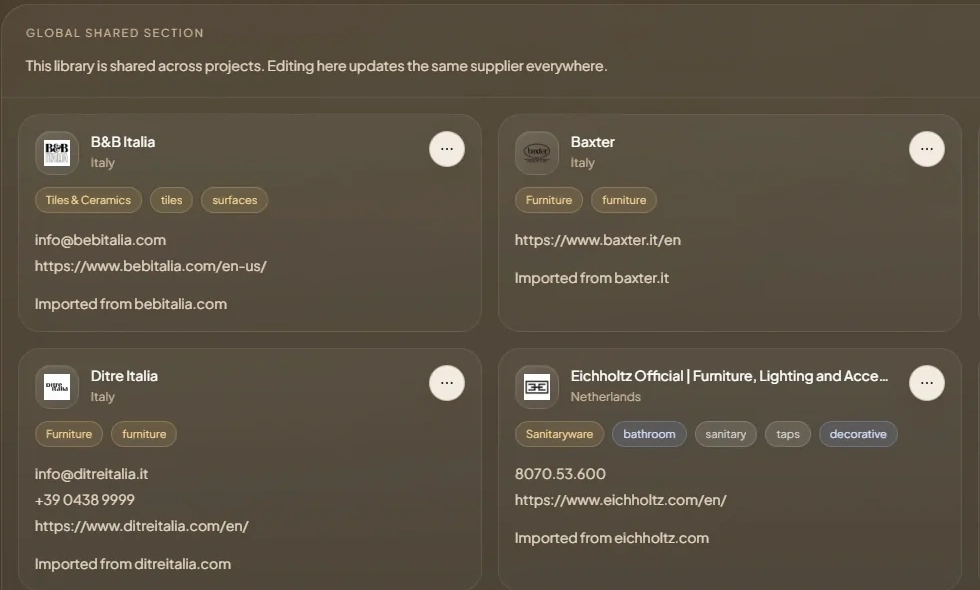
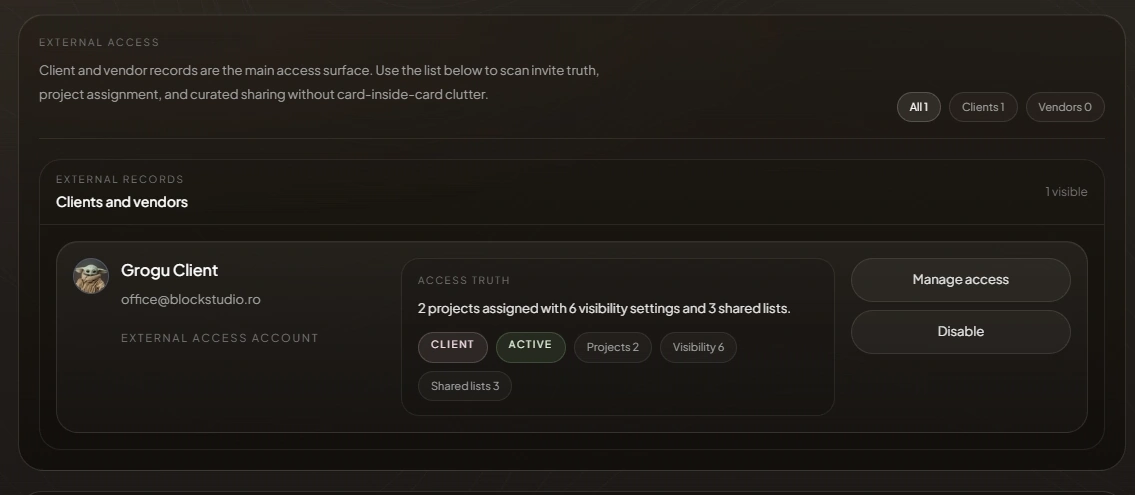
Internal work stays inside the studio while external access remains explicit by project, visibility, and shared list.
Source on site, check the current visual, open a document, or answer a client comment without falling back to detached files and chat history.
Free includes one active project and requires no payment method.
Core project workflow included across every plan.
Start with one real project. Bring the rooms, products, suppliers, visuals, documents, and client review together.